
Established in 2025 through a generous donation, the Pushkala & Ramani Travel Fellowship for ICTS Women Researchers supports women PhD students, postdoctoral researchers, and faculty at ICTS by providing funding for academic travel, including participation in conferences, workshops, and collaborative research visits. The fellowship reflects ICTS's commitment to advancing the professional development of women in science by enabling greater engagement with the global research community.
Since its inception, the fellowship has enabled women researchers at ICTS to present their work at leading international conferences, participate in specialised workshops, and undertake collaborative research visits with scientists around the world. These opportunities help researchers disseminate their work, receive valuable feedback, establish new collaborations, and strengthen their research careers.
ICTS gratefully acknowledges the donor's generosity in making this fellowship possible.
Abstract:
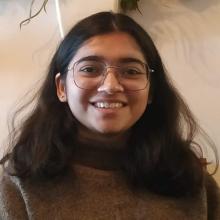
The possible presence of quark matter in the neutron star (NS) core remains an open question. As the NS spin down, its central density gradually increases, and upon reaching a critical density, a phase transition can occur, converting nuclear matter into quark matter. A first order phase transition can lead to a “micro-collapse” and structural rearrangement of the star, releasing energy that can go into multiple channels. Using a family of hybrid equations of state (EOS), we calculate the total energy released during the phase transition. A fraction of this energy can excite the f-mode oscillations of the NS, resulting in the emission of burst-type gravitational waves (GWs). Additionally, this phase transition can also cause a sudden spin-up of the star, which can be observed as a pulsar glitch. By combining the non-observation of such bursts in LIGO-Virgo observations with the largest glitch observed in pulsars, we place joint constraints on the micro-collapse model, the GW energy budget, and the size of quark core formed during the transition.

Abstract:
Realizing the full promise of multi-messenger astronomy relies on our capacity for swift and precise gravitational wave event localization. While early warning for circularized binaries are mature, the anticipated detection of eccentric mergers, originating from dynamically dense environments like globular clusters, introduces a substantial analytical complexity. Specifically, accurate sky localization for early warning requires precise signal-to-noise ratio (SNR) calculations, which traditionally initiate integration upon signal entry into the detector band. For circular binaries, with their monotonic frequency evolution, this approach is straightforward. However, eccentric binaries exhibit oscillatory instantaneous frequency evolution, featuring multiple occurrences of a given frequency and heightened frequencies at periastron passages. Critically, cycles of this instantaneous frequency enter the detector band before than the orbit-averaged frequency, which itself increases monotonically. This raises a fundamental question: where should integration commence for accurate SNR and sky area determination? We examine two distinct approaches: (1) initiating integration upon entry of the orbit-averaged frequency into the detector band, and (2) utilizing periastron passage entry as the starting point. We discuss these two choices for different observing scenarios and determine the appropriate approach to effectively localize eccentric sources in the sky. Furthermore, we investigate the contribution of sub-dominant modes, in conjunction with the dominant mode, on the sky localization of eccentric signals across a range of mass and spin parameters.
Abstract:
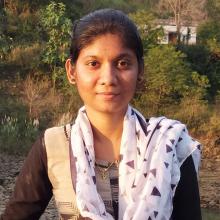
Astrophysical jets are collimated outflows from accreting black holes, observed in systems from XRBs to AGNs. While their formation remains uncertain, jet power is thought to depend on black hole spin, mass, and magnetic flux—likely sourced by large-scale magnetic fields. Observations support the presence of dynamically significant fields near central black holes, possibly generated by turbulence-driven dynamos triggered by magneto-rotational instability (MRI).
This work focuses on the dynamo mechanism as a driver of large-scale magnetic field generation in accretion disks. We investigate the connection between dynamo in the disk to the jets launched at the central blackhole. We conduct GRMHD simulations of accretion disks using the Black Hole Accretion Code (BHAC) in 3D towards this. While dynamos are relatively better understood in thin disks, their behavior in thick disk environments around supermassive black holes remains poorly constrained, especially when simulations are initialized with multi-loop magnetic field configurations.
A key aspect of this study is understanding how magnetic flux is generated and transported inward within the disk, and how this flux interacts with black hole spin to influence jet launching. In our GRMHD simulations, the magnetic field initially grows exponentially due to the MRI and then enters a sustained phase marked by clear dynamo cycles. We find a likely correlation between the dynamo generated large-scale fields in the disk, the magnetic flux at the horizon and early-time jet launching. This connection is currently under active investigation.
Slides: Link
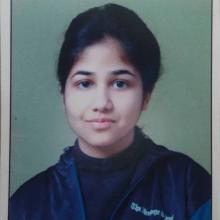
- Aix-Marseille University, France (Visit Prof. Matthias Merkel); Oral talk on “Interplay of growth, geometry and patterning in morphogenesis”, 16–19 Sept 2025
- Coarse-Graining Tissue Mechanics, Ljubljana [Conference]; Oral talk on “Size and shape regulation in growing tissues: A hydrodynamic model for determinate, indeterminate and proportionate growth”, 22–25 Sept 2025
- EMBL Barcelona (Visit Prof. Vikas Trivedi); Oral talk on: “Size and shape regulation in growing tissues: A hydrodynamic model for determinate, indeterminate and proportionate growth”, 26 Sept 2025
Abstracts:
- 1. Interplay of growth, geometry and patterning in morphogenesis
Traditionally, pattern formation is studied independently of growth / morphogenesis. In this talk, we explore how growth, geometry and patterning work in conjunction to ensure robustness of shape, size and form.
In the first part of the talk, we neglect growth and explore the sensitivity of patterns in the actomyosin cortex of cells to the geometry of the confining domain. In the case of a circular disk, our analytical results predict transitions from isotropic to anisotropic patterns upon changing the strength of the active stress and the turnover rate. We confirm the existence of this secondary bifurcation of the homogeneous state by an explicit numerical analysis of our model. Extending our numerical analysis to harmonic deformations of the circular disk, we show that the emergent patterns are also sensitive to the curvature of the domain.
In the second part of the talk, we explore what the simple physics of force balance and cell number balance means for the macroscopic size of a tissue. While many organisms stop growing after they reach a target size, in many others, growth occurs throughout their life. What physical mechanisms distinguish these phenotypes? What sets the final size and growth rates? We develop a minimal model where (i) growth, defined as an increase in the macroscopic size of the system, is implicit (not prescribed) (ii) the domain is deformable (iii) complexities associated with signaling morphogens and growth anisotropy are neglected. In our minimal model, size is controlled depending on the competition between elasticity and magnitude of the extensile part of the active stress. There are two phases: One where growth halts after reaching a final size and the other where the domain keeps growing linearly in time. The expression for the final length in 1D reveals that there is a region in parameter space where this state is undefined -- this is exactly the phase boundary, as predicted by the full numerical solution of the model. In 2D, the two phases persist. However, growth is isotropic and the expression for final size only acquires a dimension-dependent modification. Adding the dynamics of an anisotropy tensor in our model [representative of the total effects of alignment of cell division axes, cell polarity axes and cell rearrangement directions] and a forcing due to morphogen -- two things we had neglected in our minimal model -- we recover tissue shape dynamics that qualitatively resemble those seen in explants of zebrafish. We then compare macroscopic features of the tissue [long axis and roundness] and flow fields from simulations of our model and experiments.
Journal: Link
Slides: Link
- 2. Size and shape regulation in growing tissues: A hydrodynamic model for determinate, indeterminate and proportional growth
How biological systems stop growing after they reach a target size is one of the most central questions in biology. What physical mechanisms and fields are involved in growth termination? What sets the final size? We set out to answer these questions from a mechanistic point of view. While early models focused mostly on the role of morphogens in halting growth, recently, the focus has shifted to incorporating mechanics in these models. We develop a minimal model where (i) growth, defined as an increase in the macroscopic size of the system, is implicit (not prescribed) (ii) the domain is deformable (iii) complexities associated with signaling morphogens and growth anisotropy are neglected.
In our minimal model, size is controlled depending on the competition between elasticity and magnitude of the extensile part of the active stress. There are two phases: One where growth halts after reaching a final size and the other where the domain keeps growing linearly in time. Analysis of the steady state fields in the controlled growth phase reveals that the final size is a scaled version of the initial size, with the scaling dependent on parameters like the elasticity, magnitude of active stress and homeostatic density of the tissue. The expression for the final length in 1D also reveals that there is a region in parameter space where this state is undefined -- this is exactly the phase boundary, as predicted by the full numerical solution of the model. In 2D, the two phases persist. However, growth is isotropic and the expression for final size only acquires a dimension-dependent modification. Tissue shape may change if the initial shape and/or density profile is anisotropic AND density homogenisation is faster than growth arrest -- in which case the shape becomes more and more isotropic.
Adding the dynamics of an anisotropy tensor in our model [representative of the total effects of alignment of cell division axes, cell polarity axes and cell rearrangement directions] and a forcing due to morphogen -- two things we had neglected in our minimal model -- we recover tissue shape dynamics that qualitatively resemble those seen in explants of zebrafish. We then compare macroscopic features of the tissue [long axis and roundness] from simulations of our model and experiments.
Slides for CGTM: Link
Slides for EMBL: Link
Postdoctoral Fellow
I am sincerely grateful to the ICTS Pushkala and Ramani Travel Fellowship for providing me with the financial support to visit Japan as a visiting researcher. During my visit, I will work on problems in Floquet topological matter, non-Hermitian physics, and quantum transport while interacting with researchers from diverse scientific backgrounds. I expect this experience to broaden my scientific perspective, expose me to new theoretical and computational approaches, and deepen my understanding of current research in condensed matter physics. Working in an internationally collaborative environment will also help me build lasting scientific collaborations and expand my international research network.
I hope that this opportunity encourages other students and early-career researchers to actively pursue international research experiences. Such experiences not only accelerate scientific growth but also promote the exchange of ideas across institutions and countries, making them particularly valuable for early-career researchers. In the future, I aspire to contribute to academia by advancing fundamental research in topological quantum matter and nonequilibrium quantum systems while building strong international collaborations. I am deeply thankful to ICTS for its continued support of young researchers and for making opportunities like this possible.
Integrated PhD student
Receiving the ICTS Pushkala and Ramani Travel Fellowship enabled me to attend the 24th International Conference on General Relativity and Gravitation (GR24) and the 16th Edoardo Amaldi Conference on Gravitational Waves (AMALDI16) in Glasgow, UK, my very first international conference. Presenting my work allowed me to receive direct feedback from experts in gravitational wave astrophysics and refine my research approach. Attending talks and meeting researchers face-to-face gave me a frontline view of current breakthroughs and helped me see where my own work fits into the global landscape. My experience shows how travel grants like this make international exposure accessible for early-career researchers in India, and I hope it inspires other students to seek similar opportunities. The perspective I gained in Glasgow has motivated me to continue doing meaningful research in gravitational wave astrophysics and, over time, support junior students entering the field.
Graduate Student
The Pushkala Ramani Fellowship enabled me to attend the CISM course on Fluid–Structure Interaction of Bio-Inspired Systems in Italy, an opportunity that significantly enriched my research perspective. The course brought together leading researchers and participants working on diverse aspects of bio-inspired fluid mechanics, exposing me to current methodologies, experimental techniques, and emerging research directions. Although I was not able to present my own work because it had not yet been published, attending the course allowed me to broaden my understanding of the field and gain insights that will be valuable for my ongoing research.
One of the most valuable aspects of the visit was interacting directly with researchers and fellow participants from different institutions and countries. I actively participated throughout the course by asking questions during lectures and engaging in discussions with speakers and attendees. These interactions helped me better understand different approaches to solving research problems and provided opportunities to exchange ideas. I also built new professional connections that I hope will develop into future collaborations. Overall, the experience gave me greater confidence in engaging with the international research community.
My experience demonstrates that attending high-quality international courses and workshops can be immensely valuable, even without presenting one's own research. Such opportunities provide exposure to cutting-edge work, foster meaningful scientific discussions, and help build professional networks. I would encourage other students and early-career researchers, particularly women, to apply for fellowships like the Pushkala Ramani Fellowship, as they can provide access to experiences that might otherwise be financially out of reach and help build confidence in participating in the broader research community.
I hope to contribute to academia by conducting rigorous research in fluid mechanics and bio-inspired systems while actively collaborating with researchers across disciplines. I aim to share my work through publications and conferences, mentor younger students as I progress in my career, and contribute to an inclusive and collaborative scientific environment. The exposure gained through this fellowship has reinforced the importance of international scientific exchange, and I hope to continue engaging with the global research community throughout my academic career.
Postdoctoral Fellow
Receiving the ICTS Pushkala and Ramani Travel Fellowship in 2026 gave me the opportunity to visit several leading research groups across Europe and present my work to experts in my field. The fellowship was instrumental in broadening my research horizons and strengthening my professional network at a very important stage of my career.
The first phase of my visit was to the LPTHE group at Sorbonne University, where I presented my recent work on near-extremal black holes at a departmental seminar. The insightful discussions and feedback I received helped refine my ideas and identify new directions for future research. I then attended the GPI@GGI Focus Week at the Galileo Galilei Institute in Florence, where I was invited to speak. Bringing together many of the leading researchers in my area, the workshop provided an exceptional opportunity to discuss my work, exchange ideas, and gain a broader perspective on the most important open problems in the field. I subsequently visited the Instituto de Física Teórica (IFT) in Madrid and the University of Würzburg, presenting seminars at both institutions. These visits led to valuable discussions and the beginnings of several promising collaborations.
Beyond the scientific outcomes, the fellowship significantly improved my ability to communicate my research work effectively to diverse audiences and engage in productive scientific discussions. The experience has given me greater confidence as an early-career researcher and reinforced the importance of international collaboration in advancing scientific research. I would encourage other young researchers, especially women, to avail such fellowships to advance their research careers by participating in scientific events and increasing their visibility. I look forward to sharing the knowledge and perspectives gained from this fellowship through seminars and interactions with younger researchers at ICTS and other institutes in India.
I am deeply grateful to ICTS and the Pushkala and Ramani Travel Fellowship for making this visit possible. I hope to build on the collaborations initiated during this trip and contribute meaningfully to the scientific community through impactful research and continued international collaborations.
Integrated PhD student
The ICTS Pushkala and Ramani Travel Fellowship enabled me to attend the long-term workshop on "Multi-messenger astrophysics in the dynamic universe" at the Yukawa Institute for Theoretical Physics (YITP), Kyoto University, and to visit the University of Tokyo, where I gave a talk on my recent work on fast time-domain parameter estimation for gravitational-wave signals.
The workshop brought together researchers working across gravitational waves, gamma-ray bursts, supernovae, supermassive black holes, and the formation of binary black holes and neutron stars. Talks ranged from numerical-relativity simulations of neutron star mergers to multi-wavelength transient follow-up, giving me a much broader view of how gravitational-wave observations connect to the rest of astrophysics, beyond the data-analysis problems I focus on in my research. My talk at the University of Tokyo led to useful feedback on extending my method, which I plan to follow up on.
For early-career researchers like me, fellowships like this open doors to exposure and interactions that are hard to get otherwise. I think this kind of support is especially valuable for students who don't yet have the travel funds or the network to attend such workshops on their own.
Looking ahead, I hope to continue developing gravitational-wave data analysis methods, particularly for neutron star signals, and to help make these techniques useful more broadly, including in multi-messenger and electromagnetic follow-up efforts, while also mentoring students entering the field.
PhD student
The fellowship enabled my visit to the Coarse Graining Tissue Mechanics Meeting (CGTM) in Ljubljana, where I delivered a talk. I was also able to visit EMBL Barcelona and Aix Marseille University, where I delivered seminars on my work. Interactions with researchers across institutes were very useful for receiving feedback on my research.
A key outcome was getting to network with people at various stages of their careers and learning firsthand the research directions being actively pursued in the field. Seeing which problems people are choosing to work on, and how they're approaching them, was as valuable as the technical feedback itself, and gave me a clearer sense of where my own work fits and where it could go next.
Presenting my work at CGTM and in two host groups turned into technical feedback, new open problems, and contacts that outlast the visit itself. Early-career researchers often underestimate how much comes from showing up in person -- how often a conversation at a meeting turns into a collaboration or a question you'd never have reached on your own.
I hope to continue contributing to research in biophysics, developing models and computational tools that are useful to the wider community. Alongside my own work, I'd like to contribute through teaching and mentoring, and by supporting other early-career researchers as they find their footing in the field.
PhD student
The fellowship enabled me to attend the International Symposium at the National Astronomical Observatories, Chinese Academy of Sciences (NAOC) Beijing, China. This marks my first international conference and my first opportunity to present my research through a contributed talk. As an early-career researcher, this experience was an important milestone. The financial support made it possible for me to participate in a conference that would otherwise have been difficult to attend, allowing me to engage directly with the global astrophysics community.
One of the most valuable aspects of the visit was interacting with researchers working on a wide range of astrophysical systems connected by the common theme of magnetic fields. My work focuses on theoretical studies of black hole accretion and jets, but interacting with researchers from a wide range of astrophysical backgrounds, including both theory and observations, gave me a broader perspective on the different approaches and challenges across the field.
I believe experiences like this are especially valuable for students and early-career researchers, as they provide opportunities to receive constructive feedback, build professional networks, and gain exposure to ideas beyond one's immediate area of expertise. Presenting research and interacting with scientists from different backgrounds also builds confidence and encourages future collaborations.
Looking ahead, I hope to contribute to academia by pursuing fundamental research in plasma astrophysics while fostering collaborations across theoretical, computational, and observational communities. I also aspire to actively teach, participate in scientific meetings and outreach activities that promote knowledge sharing and create an inclusive research environment.
Postdoctoral Fellow
Financial support from the Pushkala Ramani Travel Fellowship allowed me to take part in the Quantum Connections summer school (16-th edition) held in Stockholm, Sweden, which broadly covered aspects of quantum mechanics, ranging from frontline quantum matter and information to the forefront of particle physics and all the way to the fundamental structure of matter. Attending this conference provided me the opportunity to engage with leading experts in ultra-cold atomic platforms both theoretical and experimental physicists.
As this school covered a broad range of topics, it was very useful in giving me an idea about the current state-of-the-art in several research directions both in condensed matter as well as high-energy physics. Presenting my own research work and discussing it with leading experts in the field and also with other participants gave me valuable feedback and new ideas that I can take back to my own work. I enjoyed interacting with researchers from diverse backgrounds. The whole experience was both intellectually stimulating and personally motivating.
Looking back, I'm really grateful that I had the chance to attend through the Pushkala and Ramani travel fellowship. Without that support, participating in an event like this would have been impossible. I hope more students and early-career researchers, especially women, take advantage of opportunities like this. This is a great way to step outside your usual academic environment and meet people with shared interests and gain confidence through sharing your own research and exchanging ideas with the wider scientific community.
This experience has motivated me to keep pursuing research in condensed matter systems and to stay connected with the broader scientific community. I hope to continue sharing my work, learning from others, and, as I grow in my career, support and encourage younger students the way others have supported me.